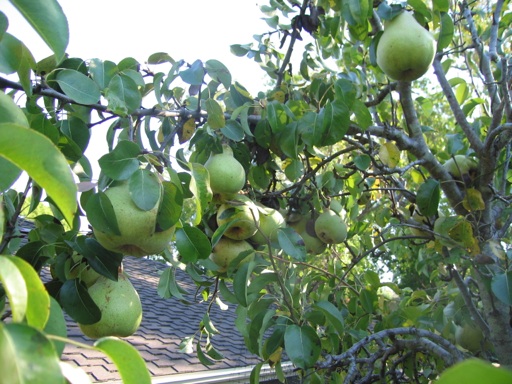
Last weekend, I harvested about 130 pears from our Comice pear tree. They are now in our extra refrigerator chilling for a month before I will take them out to fully ripen at room temperature. Our Comice pear tree is looking much healthier today than it did in past years. Once diffence is that I have been watering it 6 days a week. This tree seems to require lots of water, at least in our dry summer climate. In past years, I watered it 2-3 days a week, and the tree typically lost most of its leaves by September. This year, it has dropped many leaves already, but it still has most of its leaves now.
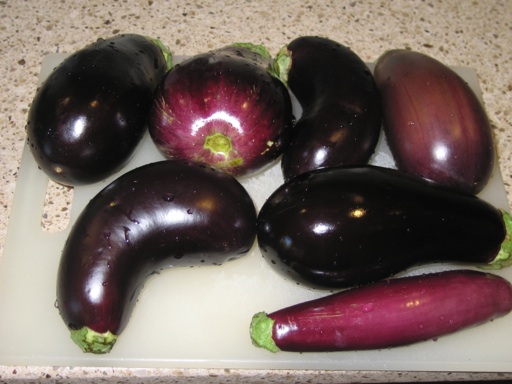
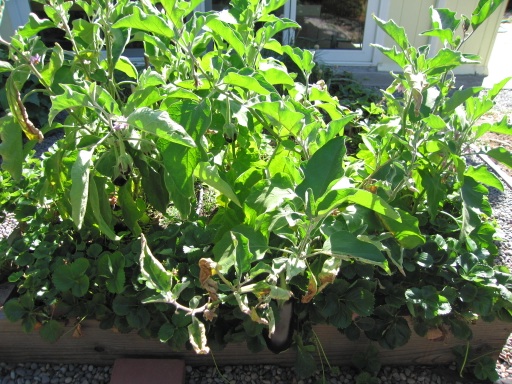
I am finally harvesting egggplants from our garden. I didn’t pick the first eggplants until late August, and it wasn’t until early September that I harvested several eggplants at once. Eggplants seem to thrive in warm weather. We have had relatively warm weather since early August, and our eggplants have been doing reasonably well since then.
September 30 2013 | Eggplant and Pears | Comments Off on Fall Eggplants and Pears
This weekend, I harvested all of the almonds on our Graden Prince almond tree. I picked them by hand, rather than shake the tree, because the tree is only 5 feet tall, and it only had about 200 almonds on it. Here’s what the tree looked like before the harvest:
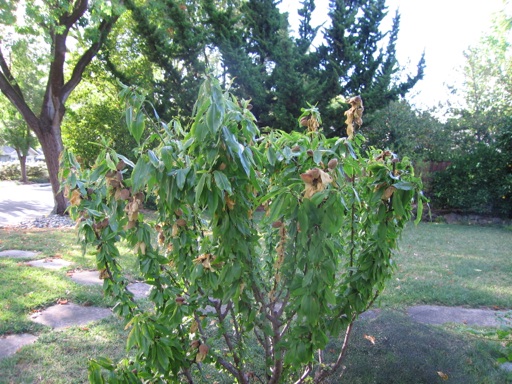
Each almond grows inside a hard shell and a soft hull. After picking each almond, I removed the soft hull, which is the first layer. I may have waited too late to harvest them, because many of the almond shells have white mildew on them. However, I have cracked a few of the shells open already, and the almonds inside appear to be free of mold and mildew.
After the harvest, I placed the almonds in their hard shells onto a cookie sheet to dry in the sun for a few days. I am covering the cookie sheet with netting in the daytime and bringing it inside at night to prevent them from being eaten by birds and squirrels. After the drying process, I will remove the almonds from their shells and then roast them in the oven.
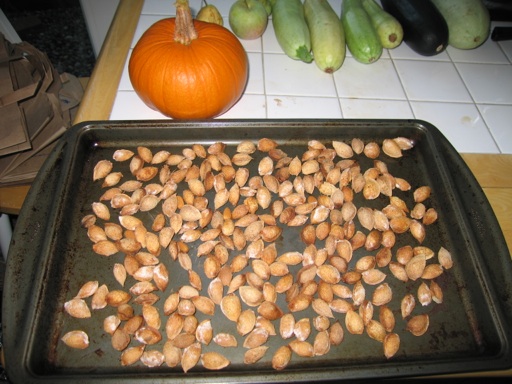
That’s a sugar pie pumpkin in the background of the above picture that I grew in our yard this summer and just harvested this weekend. I roasted it and made pumpkin soup with it, which turned out very well. We also roast and eat the pumpkin seeds.
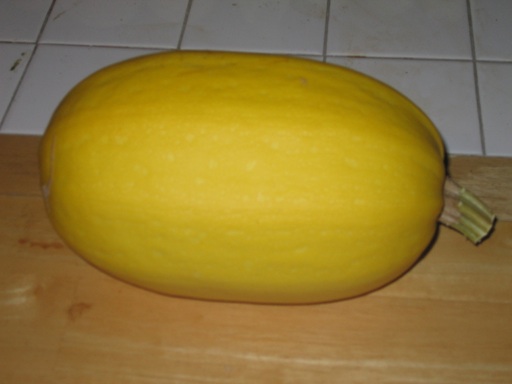
Below is a photo of a spaghetti squash that was also grown in our yard this year and just harvested. Winter squash has turned out to be very easy to grow in our yard. I just planted the seeds directly into the ground in the spring (some I planted in pots and then transplanted) and kept the plants watered through summer (watering nearly everyday with an automatic microspray system). I didn’t fertilize them or spray them. Six months later, almost every vine has at least one large squash.
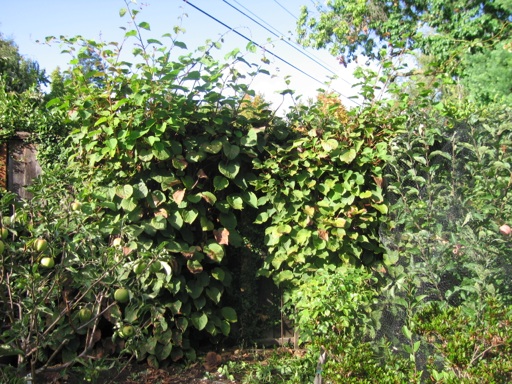
I’ve received some comments asking how my kiwifruit plants are doing. Below is a picture of them. The male plant is on the left and the female plant is on the right. They are both growing vigorously along our back fence, producing lots of long vines and leaves. I have to prune them 3-4 times a year to keep them to a reasonable size. However, neither plant has produced a single bloom, and the female plant has not produced a single fruit yet. I’m not sure why. Perhaps they are still not mature enough. They are both 4 years old.
September 22 2013 | Almond and Kiwifruit and Squash | Comments Off on Almond and Squash Harvest
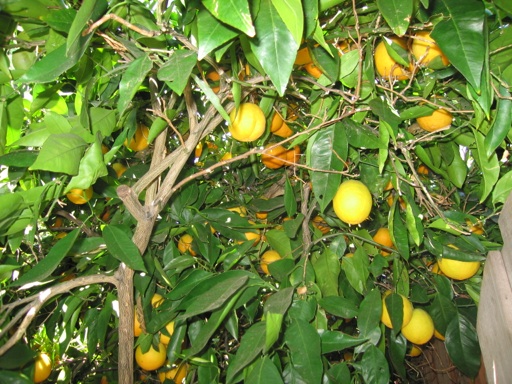
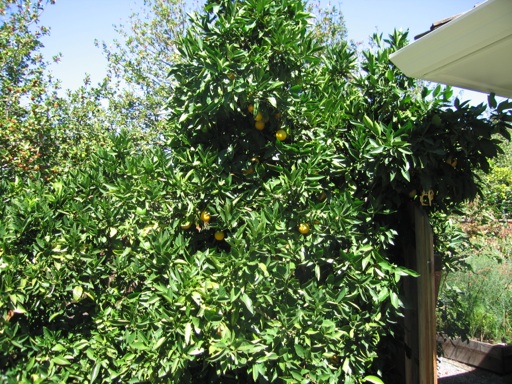
The valencia orange tree in our yard has hundreds of oranges on it this year. Although most of the oranges are small, it’s still the largest harvest it has ever had. Most of the oranges are hidden under the leaves. So it seems that there’s not much fruit one tree until you look past the outer layer of leaves. I’ve picked several dozen already, and I have barely made a dent.
These valencia oranges ripen in mid-summer in our climate and are good through fall. They might even last on the tree into winter, although I have never left ripe oranges on the tree that long. They’re a nice counterpart to navels, which are seasonal in winter and spring.
As I said in my older posts on this tree, I juice most of the oranges I harvest from this tree. There are too many to eat individually. These oranges last on the tree into November without losing any noticable quality. This year, I may be testing if they will last on the tree into December, which will be a first. I’m not sure how the ripe fruit will fare after the first frost, which typically occurs here in December. Although this tree and its unripe green fruit have survived two winters in a row that both had cold spells down to about 27 degrees F without experiencing any freeze damage.
September 13 2013 | Oranges | Comments Off on Valencia Orange Tree
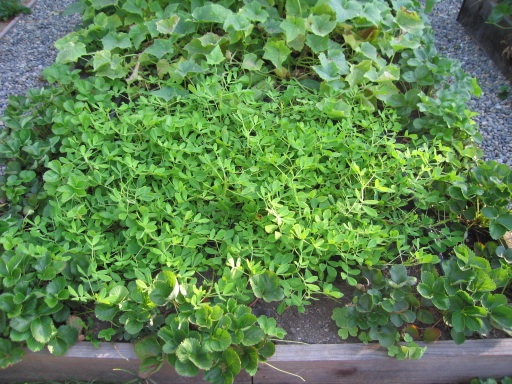
My Virginia peanut plants appear to be growing well at least above ground. They are the plants in the middle of the above photo with the pea-like leaves. It will be interesting to see if they produce any peanuts. The peanuts form underground and are harvested in late summer or early fall by pulling up the whole plant. So I can’t tell yet if any peanuts are growing underground.

In the same raised bed that I am growing peanuts, I am also growing straight eight cucumbers, which are above the peanuts in the top photo. The cucumbers are growing well and producing more cucumbers than we can eat. Cucumbers are possibly one of the easiest annual edibles to grow. I have grown them several years in row. I planted about 30 cumcuber seeds in May in this raised bed. I didn’t fertilize them or give them any special care other than regular watering. The vines grow rapidly along the ground and don’t require staking. They have about 15 large ripe cucumbers now, and I have already picked about 5.
August 25 2013 | Cucumbers and Peanuts | Comments Off on Peanuts and Cucumbers
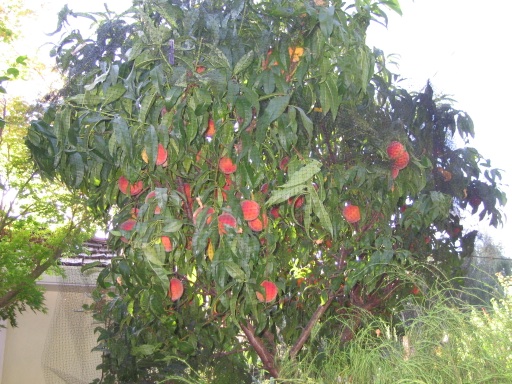
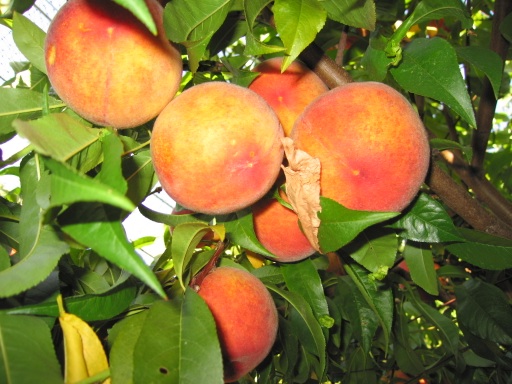
The O’Henry peach tree in our yard is dropping ripe fruit this week. Although some of the peaches on our tree are small, most of them are large this year, which I attribute to thinning the fruit in May and the age of the tree (11 years old). I’ve noticed that the larger peaches taste better than the smaller peaches. The large peaches are juicer and sweeter than the small ones. So it seems that thinning not only affects fruit size, but also flavor, at least with our peach tree. In general, the peaches that have fallen so far are sweeter and more flavorful than in the past few years. The flavor of the peaches from our tree seems to vary from fruit to fruit as well as from year to year and is partly weather dependent.
The peaches from our tree tend to fall off as soon as they are ripe. Because they are large, they usually get bruised as they hit the ground. I have bird netting arranged on the tree so that the peaches are captured by the netting as they fall. This way, most of the peaches don’t get bruised hitting the ground. Instead, they have a soft landing into the net.
Although I prune this tree twice a year, it has grown large for a peach tree. It is about 12 feet tall and about 10 feet wide. I cut off its lower branches years ago, because I thought I wanted it to look more tree-like. But now most of its branches are up high, so I need to use a ladder to harvest the fruit. If I had used better pruning techniques when it was young, I would have topped the tall branches above about 7-8 feet and allowed the lower branches to grow so the fruit would be easier to net and harvest.
August 20 2013 | Peaches/Nectarines | Comments Off on August Peaches
« Prev - Next »