Archive for the 'Peaches/Nectarines' Category
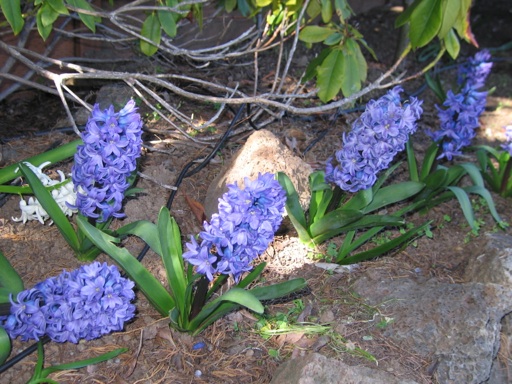
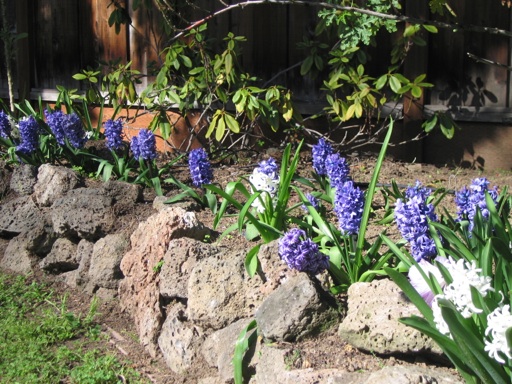
The blue hyacinths we planted last fall are already in bloom. Weeds were nearly obscuring them until I weeded around them a few weeks ago. Now they are stand outs in our front yard.
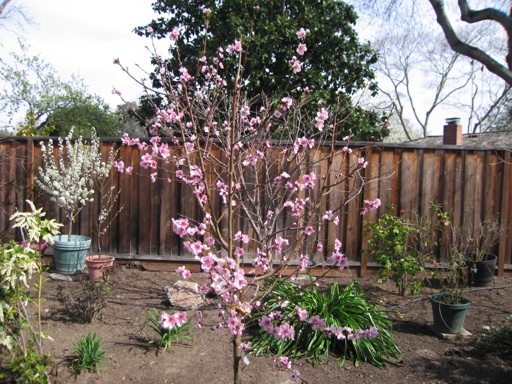
Some of our fruit trees are already in bloom this month. Below is a new arctic blaze nectarine tree I bought last year that is now blooming for the first time. My previous attempts at growing white nectarines ended in failure when the entire crop cracked and rotted, apparently from over watering. Subsequent under watering led to dead trees. This time, I am growing one in a pot to ensure better drainage.
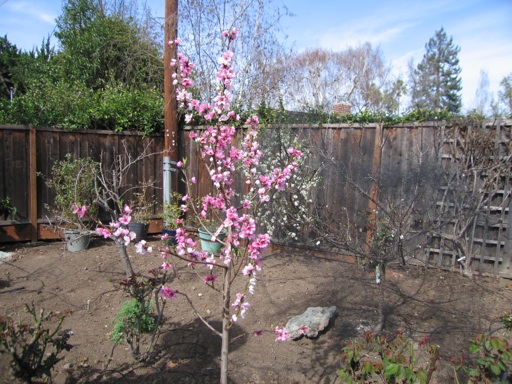
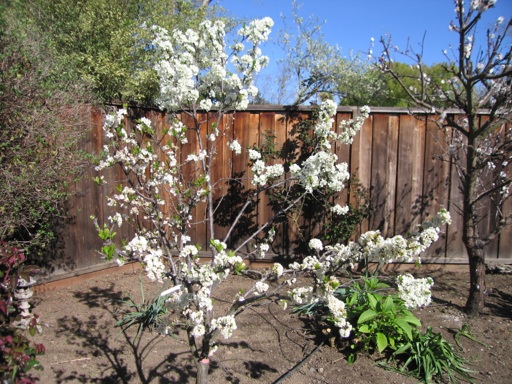
Below is our new loring peach tree, also in bloom for the first time. I bought it last year after our O’Henry peach died a few years ago.
This flavor king pluot tree is another new fruit tree that I bought last year. I am also growing it in a pot due to lack of space (too many fruit trees). It bloomed last year, but it did not set any fruit – possibly a pollination issue. Now, I have a super-pollinator (santa rosa plum) growing in a pot to the right of it.
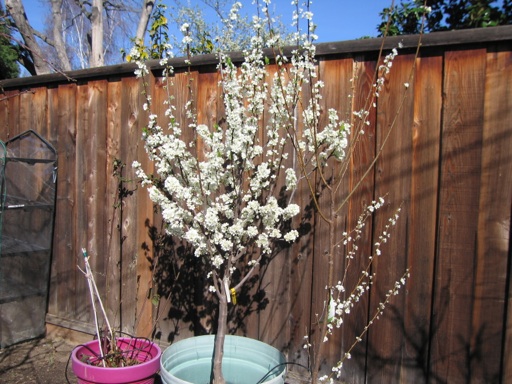
Our multi-grafted pluot tree is also in bloom (below). One of the grafts is also flavor king. Flavor king is our favorite pluot, perhaps my favorite fruit, which is the reason I bought one tree that only has a flavor king graft on it.
February 26 2016 | Hyacinths and Peaches/Nectarines and Pluots | Comments Off on Early Blooms
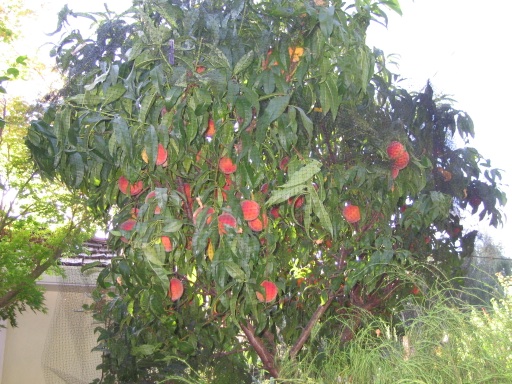
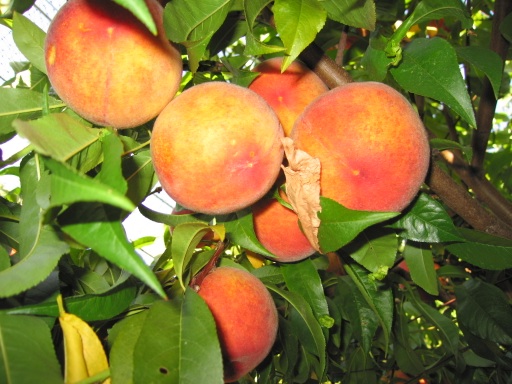
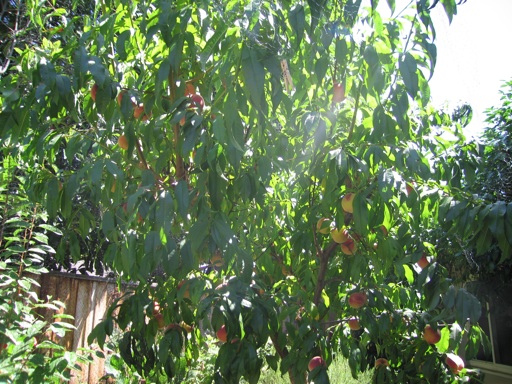
The O’Henry peach tree in our yard is dropping ripe fruit this week. Although some of the peaches on our tree are small, most of them are large this year, which I attribute to thinning the fruit in May and the age of the tree (11 years old). I’ve noticed that the larger peaches taste better than the smaller peaches. The large peaches are juicer and sweeter than the small ones. So it seems that thinning not only affects fruit size, but also flavor, at least with our peach tree. In general, the peaches that have fallen so far are sweeter and more flavorful than in the past few years. The flavor of the peaches from our tree seems to vary from fruit to fruit as well as from year to year and is partly weather dependent.
The peaches from our tree tend to fall off as soon as they are ripe. Because they are large, they usually get bruised as they hit the ground. I have bird netting arranged on the tree so that the peaches are captured by the netting as they fall. This way, most of the peaches don’t get bruised hitting the ground. Instead, they have a soft landing into the net.
Although I prune this tree twice a year, it has grown large for a peach tree. It is about 12 feet tall and about 10 feet wide. I cut off its lower branches years ago, because I thought I wanted it to look more tree-like. But now most of its branches are up high, so I need to use a ladder to harvest the fruit. If I had used better pruning techniques when it was young, I would have topped the tall branches above about 7-8 feet and allowed the lower branches to grow so the fruit would be easier to net and harvest.
August 20 2013 | Peaches/Nectarines | Comments Off on August Peaches
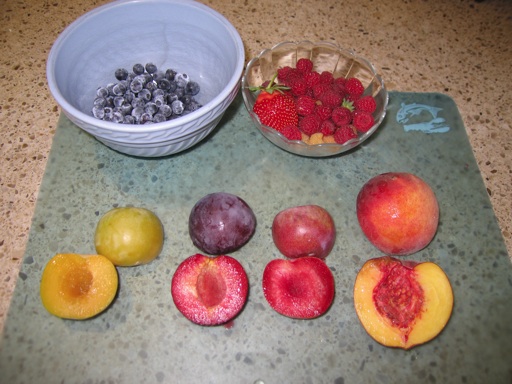
Today, I harvested and ate our first flavor queen pluot. It’s the greenish fruit on the left in the above picture. It had a very mild, somewhat sweet, flavor with no tartness. I thought it tasted nothing like a plum. I have read that flavor queen can be extremely sweet, but our weather has been so mild lately (highs in the mid-70s) that it may not have been able to reach its full sweetness potential.
I have now tasted all four of the pluot varieties from our multi-grafted pluot tree, flavor king, flavor queen, flavor supreme, and dapple dandy. I like all 4 varieties. Each one is different in color and taste. The dark purple fruit in the above picture is a flavor king. It has a nice plum-like flavor. It tastes better than most plums, except maybe Laroda plum. The skin is just a bit tart, no where near as tart as Santa Rosa or Beauty plum.
The pink fruit in the above picture is a dapple dandy pluot. The dapple dandy scion of our very small multi-grafted tree has produced at least 3 dozen pluots this year, many more than the other 3 scions. The fruits have been hanging on the tree in a near ripened state for a few weeks. The first dapple dandies I picked last month were tart. But now they are sweet with very little tartness. Like flavor queen, they taste nothing like plums, but they are sweeter than flavor queen (at least ours are). Dapple dandy may be my favorite pluot of our 4 varieties, because of the combination of producing lots of fruits and its nice mild fruity flavor.
The flavor supremes ripened over a month ago, which is why I wasn’t able to put one in this picture. They also have a delicious flavor that is somewhat plum-like.
The fruit in the lower right of the picture is one of our first O’Henry peaches of the season. Our O’Henry peach tree is now 10 years old, and I have eaten a lot of them over the years. The weather has a big effect on the flavor of our peaches too. Our O’Henry peaches so far haven’t been very sweet. They’re not too tart, just kind of bland. Again, I blame it on the mild weather. It takes some heat (80+) for several days to get them sweet. Last year, the first 2/3 of our peaches were plain tasting. But in the last week of August, we had several days of warm weather (mid-80s-about 90) and the peaches that ripened after that warm spell were sweet and very tasty.
The blueberries, raspberries and strawberry in the bowls are also from our garden. There’s not many strawberries or blueberries left to harvest, but our red and yellow everbearing raspberries are just starting to produce a lot of berries.
August 17 2012 | Peaches/Nectarines and Pluots | Comments Off on Fruity Flavors
In the past few weeks, I have canned peaches, tomatoes, and cucumbers from our garden. Last weekend, I made more tomato sauce with our garden tomatoes. I have made a total of about 15 jars of tomato sauce over the past month. I also canned about 40 peaches from our O’Henry peach tree last weekend. Here is a photo of the bottled tomato sauce, cucumber pickles, and peaches sitting on our kitchen shelf.
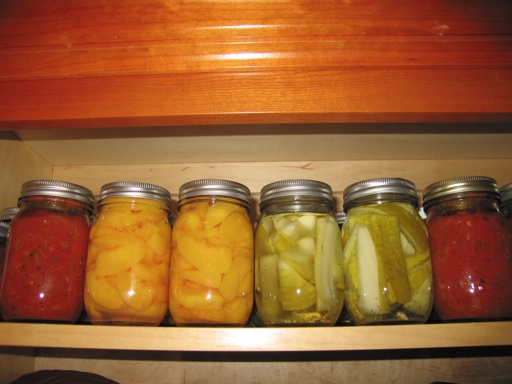
In general, low acid foods need to be canned using a pressure cooker. I canned the tomato sauce using a pressure cooker, because I put low acid vegetables in it including celery, onions, and carrots. High acid foods can be canned by boiling them in water. I canned the peaches and the cucumbers using the boiling water canning method. The recipe for the cucumber pickles called for a lot of added vinegar, which raised their acidity level enough to obviate the need to can them with a pressure cooker.
I have harvested about 150 tomatoes in the past month from only 3 of our tomato plants. The first picture is just the harvest from last weekend. The second picture shows some of our ripe tomatoes on the vines.
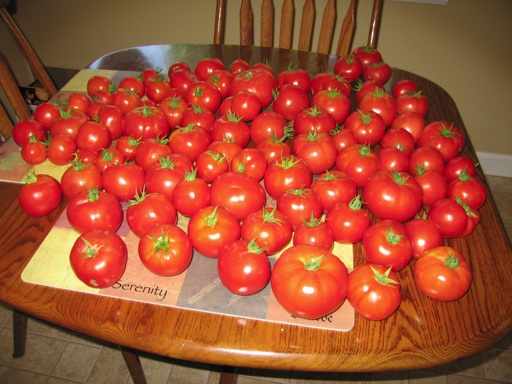
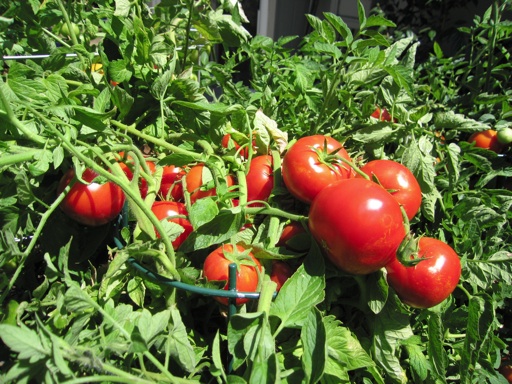
I gave several of our tomatoes away, and I canned the remainder. Canned fruits and vegetables are supposed to last for at least a year. Canning is not only a great way to preserve a large harvest for long period of time, but it also allows you to preserve recipes with very flavorful ingredients. Many store bought tomatoes and peaches are picked before they are ripe and do not fully sweeten or ripen sitting on a store shelf. Because I picked our tomatoes when they were fully ripe, our tomato sauce has a nice sweetness and flavor to it that I don’t think can be replicated using unripe tomatoes.
This is the first year I have canned home grown peaches. I grew up eating store bought canned peaches for breakfast, and I never liked those. But I decided to try canning some of our home grown peaches this year, because our O’Henry tree had nearly 100 peaches on it, and we couldn’t eat them all fresh before they spoiled. We first sliced and boiled the peaches in a medium syrup for a few minutes, bottled them with the syrup, and then processed the bottles in boiling water. I think the resulting product is tastier than the canned peaches I grew up eating. They are sweeter and have a better flavor and texture.
Here are some pictures of our O’Henry peach tree that I took before we picked the bulk of the fruit.
August 28 2010 | Cucumbers and Peaches/Nectarines and Tomatoes | Comments Off on Canning Garden Fruits
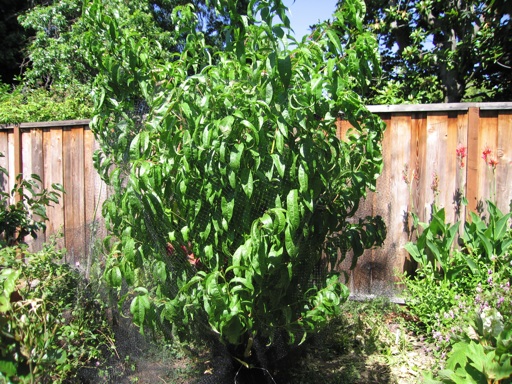
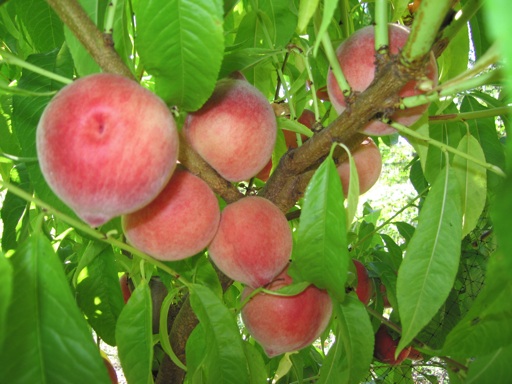
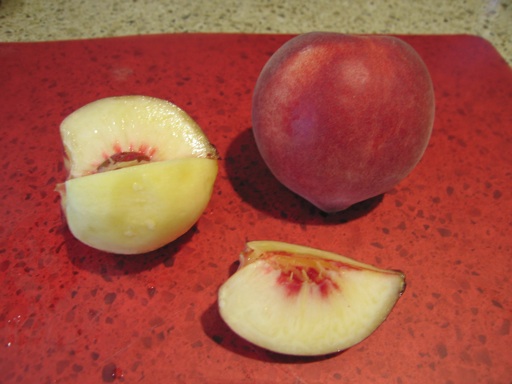
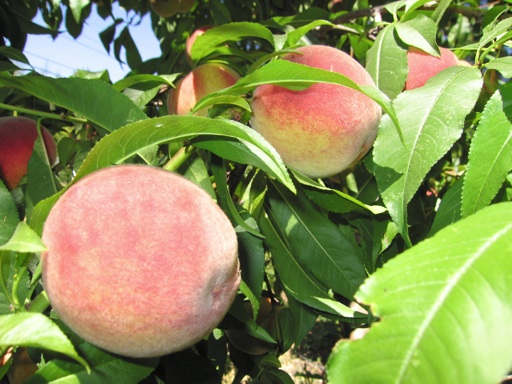
In the spring of 2009, I planted about a half dozen new fruit trees in our backyard. Two of the new trees were a Snow Beauty white peach and a Snow Queen white nectarine. This summer both trees have produced fruit for the first time. The first, second, and third photos above are pictures of the Snow Beauty tree, Snow Beauty peaches ripening on the tree, and the whole and sliced Snow Beauty fruit, respectively. All 3 pictures were taken in the past week and a half as the fruit has been ripening. Our Snow Beauty tree is a very vigorous grower. I have already heavily pruned the tree three times since I planted it last year. The first picture above was taken just after I pruned several branches off of the tree to make it easier to net.
Our Snow Beauty peach tree produced high quality fruit in its first year of production. The peaches have a nearly uniform creamy white texture with very few blemishes (see third picture). I would say that they have more flavor that the standard Babcock white peach. Most of our Snow Beauty peaches had a sweet-tart flavor. They are a only bit sweeter than a typical peach, although the larger sized fruit had a noticeably sweeter flavor than the smaller fruits. I really favor sweet peaches and nectarines, so hopefully, as the tree matures, the fruit will get sweeter.
Many of the Snow Beauty peaches were small, which I expected on such a young tree. But I was surprised that about 30% of the peaches from this tree were about as big as organic grocery store peaches. I pruned the tree heavily last winter, which limited its fruit production, and I think helped the peaches that the tree produced to grow to a larger size. The tree had about three dozen peaches this summer. Most of the fruit ripened in the past 2 weeks. 8 peaches are still on the tree, but those are nearly ripe. Overall, I am very happy with this tree.
Our Snow Beauty peaches tend to fall off the tree as soon as they are ripe. The bird netting I have on the tree really comes in handy here, because the peaches have been falling to a soft landing in the net rather than on the ground, where they are very likely to get bruised in the fall. So the netting is part of the reason that our Snow Beauty peaches have been nearly blemish free. I have noticed that the white peaches I have purchased from grocery stores often have several blemishes (e.g., bruised and discolored flesh).
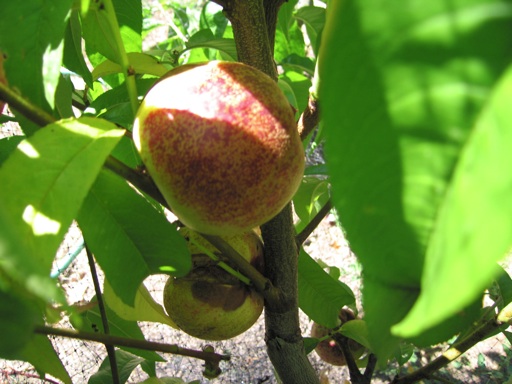
Our Snow Queen nectarine hasn’t been as successful. It hasn’t grown anywhere near as much as our Snow Beauty peach, even though I have given both trees the same amount of water, fertilizer, and sun exposure. Our Snow Queen tree produced about a dozen nectarines this year, but nearly all of them split weeks before ripening. See the picture below. Many of the nectarines split right down to the pit. Many of the ones that didn’t split all the way to the pit were turning brown near the pit even though they didn’t feel overly ripe. Unfortunately, for these reasons, I only got to eat maybe 2 or 3 of the Snow Queen nectarines. However, the Snow Queen nectarines that I did eat were very sweet and had a great flavor, at least in my opinion. In general, I usually prefer the flavor of nectarines to the flavor of peaches.
I can see why the Snow Queen nectarine is popular in Southern California. It has a low chill requirement (200-300 hours), which makes it possible to grow and produce fruit there. The low chill requirement is not necessary where we live. We typically average about 700 chill hours here. I planted a Snow Queen tree, because I read the fruit is delicious. Now I am wondering if I can prevent the fruit from cracking open in the future. I have read that too much water can cause fruit split. I watered our Snow Queen tree nearly everyday this year, because it has not been growing much. Perhaps, I will cut back on the watering after it gets more established. All of rain we had in April and May may have also contributed to the splitting.
July 24 2010 | Peaches/Nectarines | Comments Off on White Peach v. White Nectarine
Next »