Archive for the 'Fruit' Category
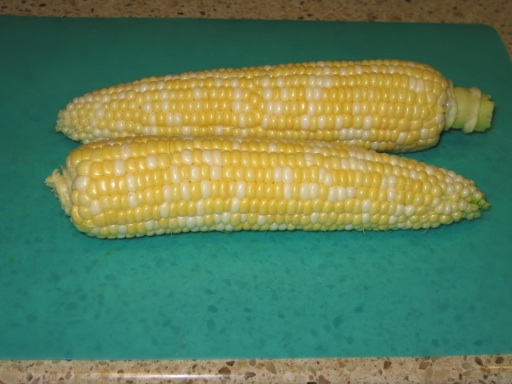
I harvested our first corn ears of the 2013 season today. The kernels on the ears were fully formed, although some of the kernels were too plump from being left on the stalk a few days too long. Here is a photo of them:
One of our corn stalks is a mutant. It has 3 corn ears on it, as seen in the next photo, which is the most I have ever seen on a single stalk. This stalk even grew suckers that also appear to be generating their own ears of corn. Typically, each stalk only produces one or two ears at the most.
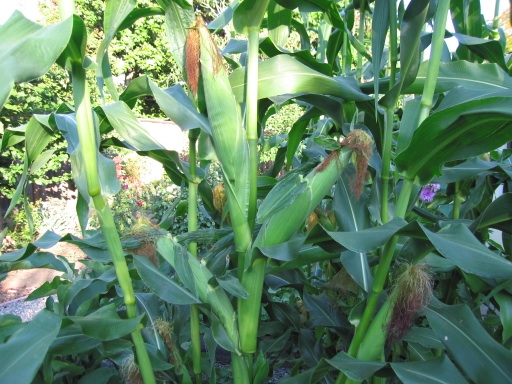
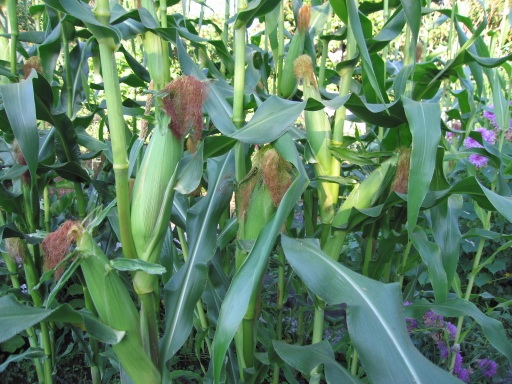
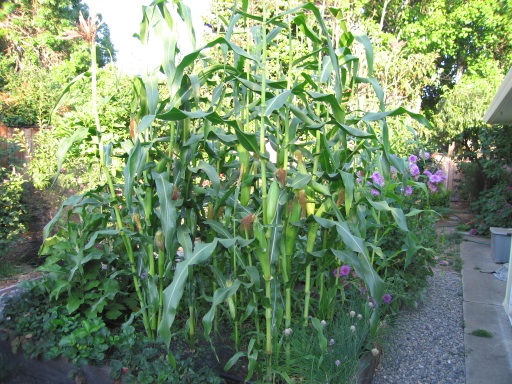
Here are more photos of the same corn patch. Many of the stalks have one or two large plump ears already. I planted these corns by seed in early April and have given them little extra care or fertilizer since then other than regular watering with an automatic micro-spary system. I planted the seeds very close together about 12 inches apart in three rows. Most of the stalks have grown to their full height, but a few of the stalks that sprouted later got crowded by the others and did not reach their full heigth. The stunted stalks tend to produce small ears or none at all.
July 23 2013 | Corn | Comments Off on Mutant Corn
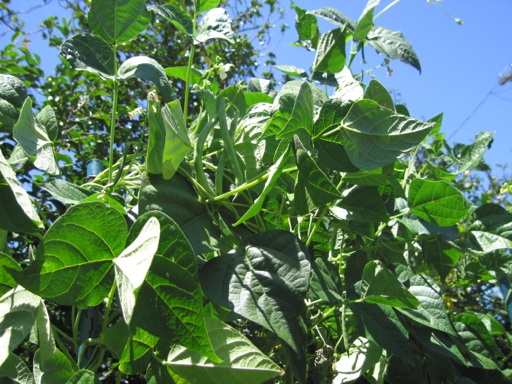
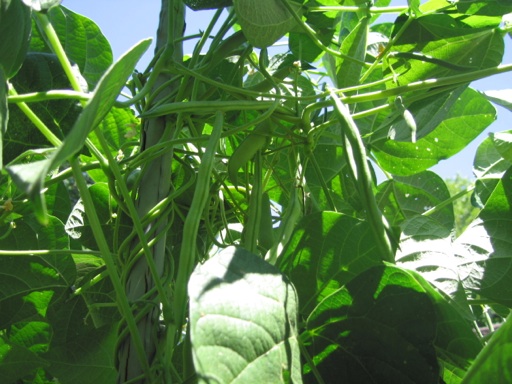
The blue lake beans I planted in March have produced a large amount of beans since late May. I have been picking at least a pound of them about twice per week. Most green beans can get tough and stringy if left on the vine too long. I pick my beans while the bean pods are still slender and the bean seeds inside the pods are not visibly bulging so that we can eat them while they are still tender. After the bean seeds start to get fat and the individual bean seeds inside the pods are distinguishable, they are usually too tough. After bean flowers bloom, the bean pods grow rapidly to full size in about a week. In order to get as many beans as possible while they are still tender but not too small, I have been picking them about twice per week and throwing away the ones that are too fat. I do miss a lot of them, because many are hidden among the leaves.
June 29 2013 | Beans | Comments Off on Prolific Green Beans
Last March around the first of spring, I planted blue lake pole bean seeds and light and dark green zucchini seeds directly into one of our raised beds. I stared harvesting green beans and zucchinis in late May, and they have been producing prolificly since then. This year is the earliest harvest I’ve ever had for beans and zucchini. In the past, my green beans and zucchini didn’t mature until mid-June, and I have always planted them at the same time around the first day of spring. This year’s warmer weather was likely the cause.
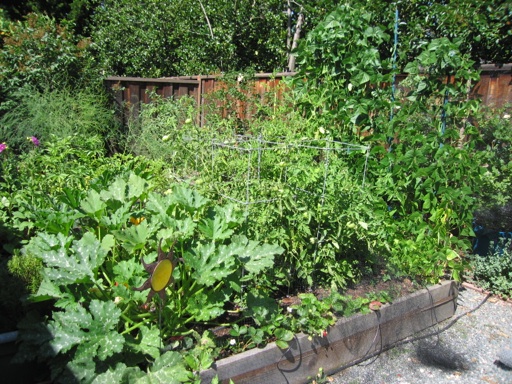
Below is a photo of one of my raised beds that has pole beans growing on a wire support in the back, tomatoes in the middle in square cages, zucchini up front, and strawberries growing around the edge. This is the same bed shown in my Apr. 20 post. The plants are close together, which helps to prevent weed growth.
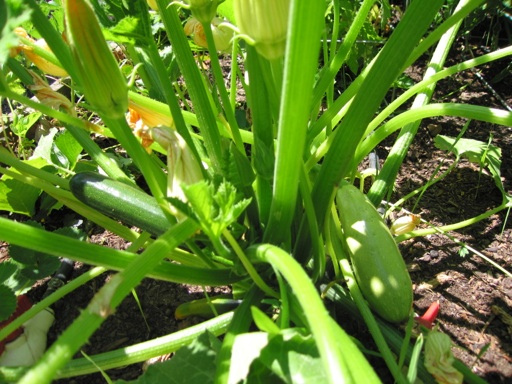
This is a close up photo of one group of my zucchinis:
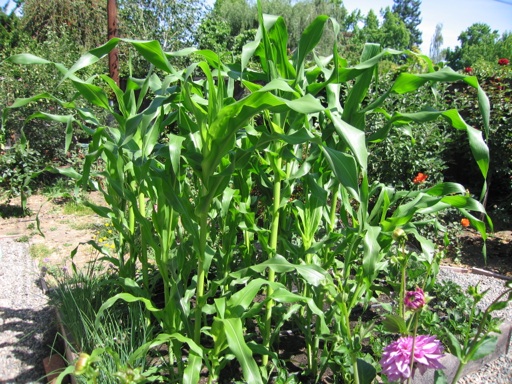
My corn plants are also precocious this year. I planted corn by seed on Apr. 8 directly into another raised bed. The corn seeds took 2 weeks to sprout, but it has been growing rapidly since then. They already are pushing out the tassels.
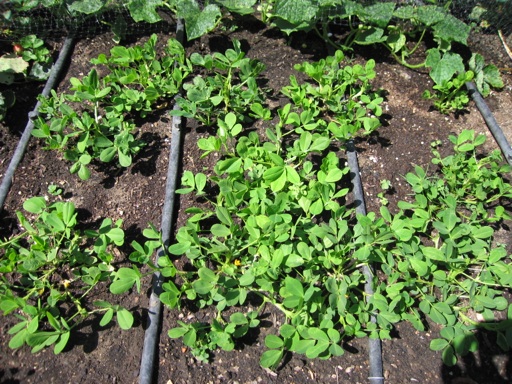
I am experimenting with growing some new edible plants this year. Peanuts are one of the new plants I am growing this year. Peanuts are supposed to thrive in warm summers. I’m not sure it will be warm enough for them here, but I think that it will be fun to try at least once. I purchased peanut seeds through an online mail order website. I planted the peanut seeds in late April. The seedlings look like little pea plants. They are already generating small yellow sweet pea-like flowers. The photo below shows what they looked like earlier today.
I am also growing spaghetti squash, butternut squash, and sugar pie pumpkins this year for the first time. I planted all of these by seed. I planted the spaghetti squash and pumpkin seeds in late March outdoors in small pots and then transplanted them into the ground after they had sprouted. I decided not to plant them in our raised beds, because their vines grow so long that they would grow out of the beds and along the paths around the beds, which would force me to constantly step over the vines.
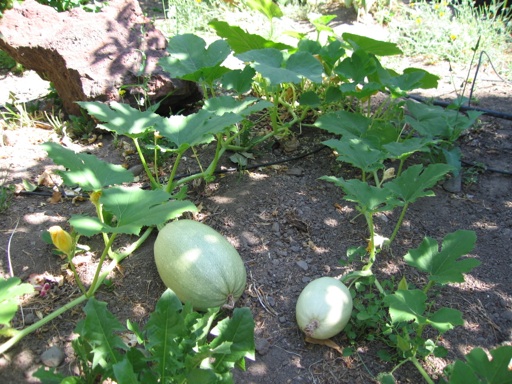
Our natural soil here is clay. Our neighbors grew pumpkins successfully in their clay soil last year, which inspired me to try them this year. The spaghetti squash and pumpkin vines are already several feet long and growing rapidly. The photo below shows two spaghetti squash vines with two spaghetti squash on them.
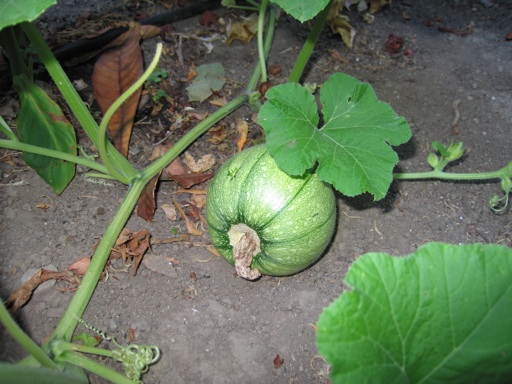
I am growing sugar pie pumpkins rather than jack-o-lantern pumpkins. I want to use pumpkins in cooking, and sugar pie pumpkins are bred for this purpose. Pumpkins are supposed to thrive in climates with relatively mild and dry summers, so they should grow reasonably well here. This is a photo of one of my pumpkin vines with a pumpkin on it:
June 15 2013 | Beans and Corn and Peanuts and Pumpkin and Squash and Zucchini | Comments Off on Vegetable Assortment
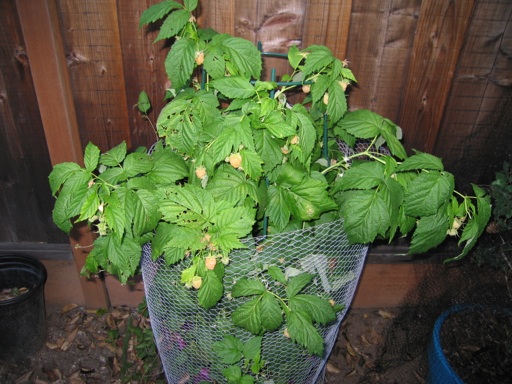
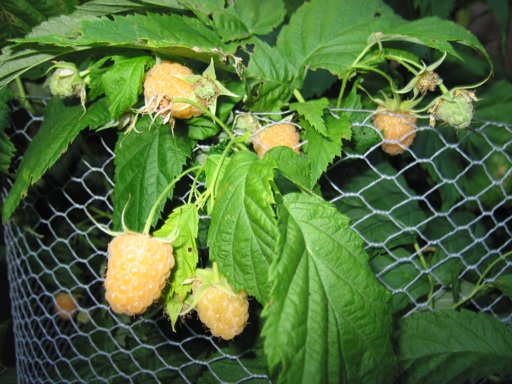
These are photos of my Anne rasberry bush. I purchased it as a bare root plant from an online mail order website about three years ago. I am growing it in a pot, because raspberries can spread quickly when grown in the ground. So far, it has taken well to the pot. It has produced berries every year. It even produced a few berries in its first growing season. I support the raspberry canes with chicken wire and a tomato cage. Because the canes need to be pruned each winter, I don’t think it’s worth the effort to tie the canes to a trellis.
Anne is an everbearing raspberry that is supposed to produce a first crop of berries in early summer and a second crop of berries in late summer into fall. Last year, I harvested a few berries in late June and early July, and larger crop mainly in August. This year, its first crop of raspberries starting ripening in late May. I have been harvesting golden raspberries every few days for the past two weeks now.
I really enjoy the taste of these raspberries. They have a nice sweet-tart flavor. They are less tart than red rasberries. The only problem I’ve had with this plant is insects eating some of the leaves and berries. I haven’t been able to determine what type of insect it is yet, and I don’t want to spray the plant while it has berries on it.
I have read that raspberries prefer climates that have slowly warming temperatures in the springtime. We have that climate here, where highs are still mainly in the 70s, and it has been mild since early March. I’ve noticed that the leaves of this raspberry plant can look burnt after a heatwave. I have it now growing in a spot that gets morning sun and afternoon shade after about 1 pm, and it seems to like that degree of exposure better than full sun all day long.
June 05 2013 | Raspberries | Comments Off on Golden Raspberries
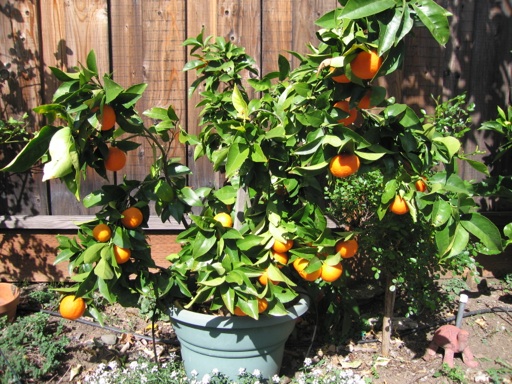
This is a photo of a page mandarin orange bush we have growing in pot. I had this plant growing in the ground for years, but it always looked unhappy. It grew very little and had yellowing leaves and few fruits, despite repeated applications of fertilizer. It was growing in a spot where it had root competition from larger bushes.
After I transplanted it into a pot, it started growing, greening, and blooming. It was full of fruit, and we have been enjoying them for the past month. They have a very good flavor. I purchased this particular variety, page mandarin, because some people have written that it is one of the best mandarins. The flesh of the fruits are a bit chewy like most mandarins, but they are much more tender than some other varieties like Satsuma.
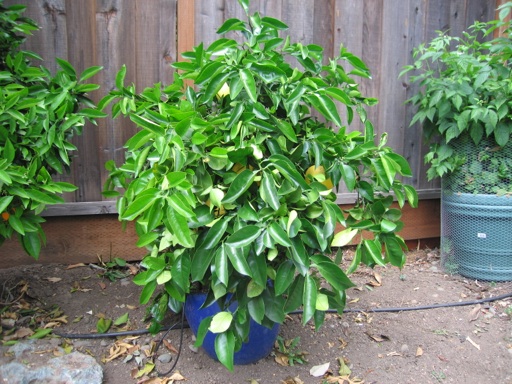
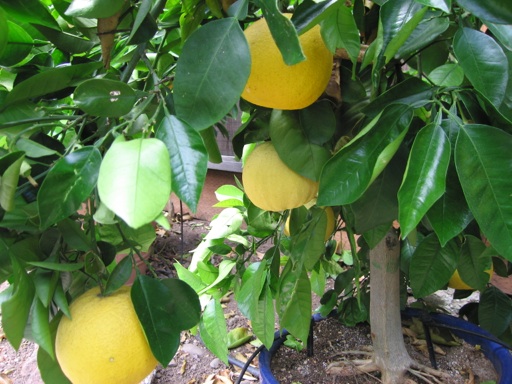
These are current photos of our potted Oroblanco citrus. It has grown very well in the past two years since we bought it, even though its pot is small compared to the size of the plant. It is full of fruit this spring. It has about 15 Oroblanco fruits, which is a lot of fruit for a plant this size. As you can see from the second picture, each fruit is big, about the size of large grapefruit. Last year, our Oroblanco produced a few fruits, but they were sour, bordering on inedible. So far this year, the fruits have been sweet and tasty. The flavor is dramatically better than last year. Perhaps the warm weather we’ve had this spring has been the cause.
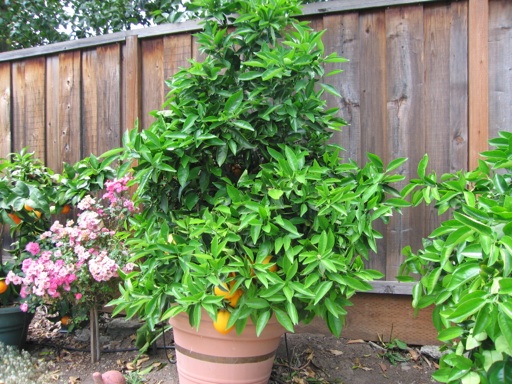
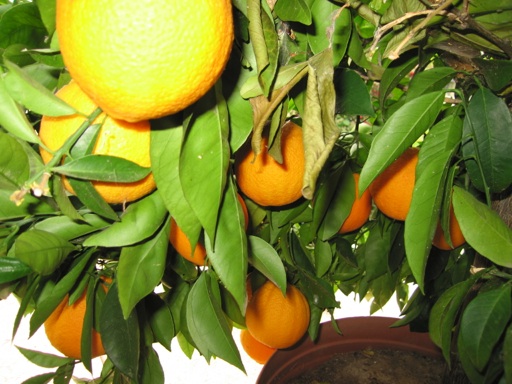
This is a current photo of our potted Washington navel orange bush. It has grown rapidly since I transplanted it into a pot a few years ago. It was loaded with fruit about a month ago. I’d estimate this small bush had over 2 dozen oranges. We have already eaten about half of them. They usually just fall to the ground when they are ripe. Its oranges are very large in size, but the flavor is not quite as good as the much older navel orange bush we have growing in the ground in another part of the yard.
May 07 2013 | Mandarins and Oranges and Oroblanco | Comments Off on Citrus in Pots
« Prev - Next »