Archive for the 'Fruit' Category
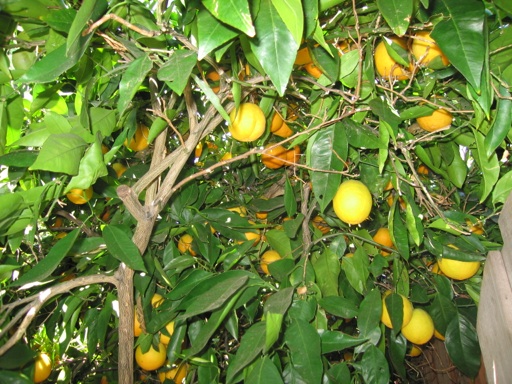
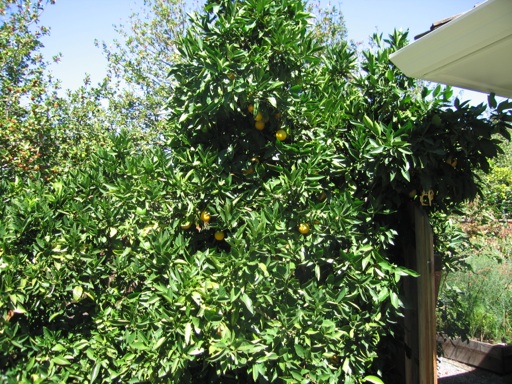
The valencia orange tree in our yard has hundreds of oranges on it this year. Although most of the oranges are small, it’s still the largest harvest it has ever had. Most of the oranges are hidden under the leaves. So it seems that there’s not much fruit one tree until you look past the outer layer of leaves. I’ve picked several dozen already, and I have barely made a dent.
These valencia oranges ripen in mid-summer in our climate and are good through fall. They might even last on the tree into winter, although I have never left ripe oranges on the tree that long. They’re a nice counterpart to navels, which are seasonal in winter and spring.
As I said in my older posts on this tree, I juice most of the oranges I harvest from this tree. There are too many to eat individually. These oranges last on the tree into November without losing any noticable quality. This year, I may be testing if they will last on the tree into December, which will be a first. I’m not sure how the ripe fruit will fare after the first frost, which typically occurs here in December. Although this tree and its unripe green fruit have survived two winters in a row that both had cold spells down to about 27 degrees F without experiencing any freeze damage.
September 13 2013 | Oranges | Comments Off on Valencia Orange Tree
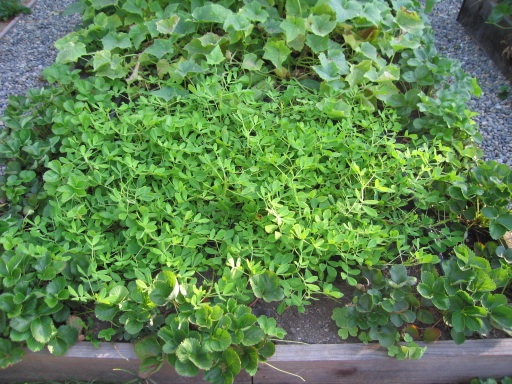
My Virginia peanut plants appear to be growing well at least above ground. They are the plants in the middle of the above photo with the pea-like leaves. It will be interesting to see if they produce any peanuts. The peanuts form underground and are harvested in late summer or early fall by pulling up the whole plant. So I can’t tell yet if any peanuts are growing underground.

In the same raised bed that I am growing peanuts, I am also growing straight eight cucumbers, which are above the peanuts in the top photo. The cucumbers are growing well and producing more cucumbers than we can eat. Cucumbers are possibly one of the easiest annual edibles to grow. I have grown them several years in row. I planted about 30 cumcuber seeds in May in this raised bed. I didn’t fertilize them or give them any special care other than regular watering. The vines grow rapidly along the ground and don’t require staking. They have about 15 large ripe cucumbers now, and I have already picked about 5.
August 25 2013 | Cucumbers and Peanuts | Comments Off on Peanuts and Cucumbers
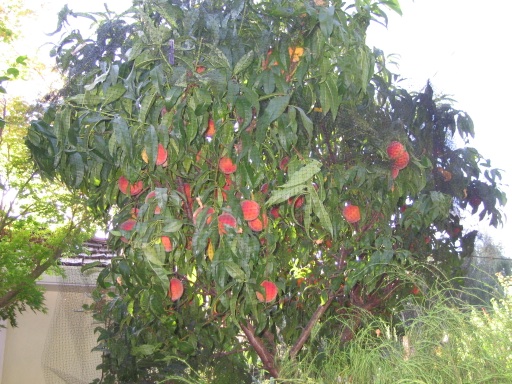
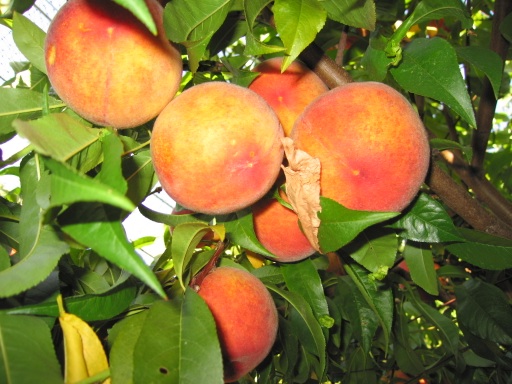
The O’Henry peach tree in our yard is dropping ripe fruit this week. Although some of the peaches on our tree are small, most of them are large this year, which I attribute to thinning the fruit in May and the age of the tree (11 years old). I’ve noticed that the larger peaches taste better than the smaller peaches. The large peaches are juicer and sweeter than the small ones. So it seems that thinning not only affects fruit size, but also flavor, at least with our peach tree. In general, the peaches that have fallen so far are sweeter and more flavorful than in the past few years. The flavor of the peaches from our tree seems to vary from fruit to fruit as well as from year to year and is partly weather dependent.
The peaches from our tree tend to fall off as soon as they are ripe. Because they are large, they usually get bruised as they hit the ground. I have bird netting arranged on the tree so that the peaches are captured by the netting as they fall. This way, most of the peaches don’t get bruised hitting the ground. Instead, they have a soft landing into the net.
Although I prune this tree twice a year, it has grown large for a peach tree. It is about 12 feet tall and about 10 feet wide. I cut off its lower branches years ago, because I thought I wanted it to look more tree-like. But now most of its branches are up high, so I need to use a ladder to harvest the fruit. If I had used better pruning techniques when it was young, I would have topped the tall branches above about 7-8 feet and allowed the lower branches to grow so the fruit would be easier to net and harvest.
August 20 2013 | Peaches/Nectarines | Comments Off on August Peaches
As I mentioned in a preivous post, I am growing three different types of winter squash this year. The three photos below show the three different types: spaghetti squash (first photo), butternut squash (second photo), and sugar pie pumpkins (third photo).
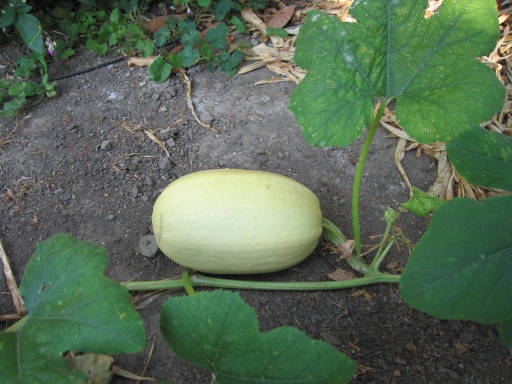
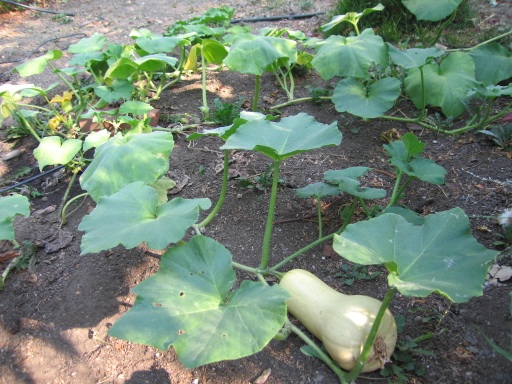
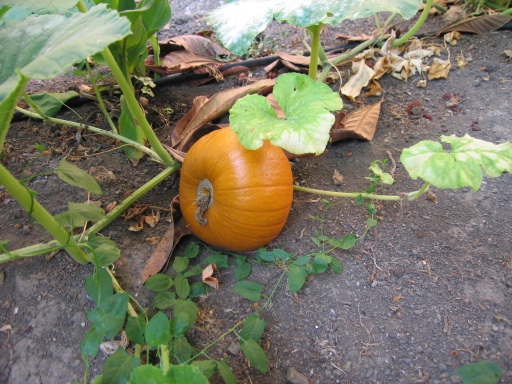
I am growing winter squash directly in our dry clay soil. I added compost in a few of the holes when I planted the seeds, but the plants that got planted with compost are not growing any better than the ones that did not. I am watering each group of plants near their roots almost everyday with automatic microsprayers. Regular water seems to be critical to getting winter squash to grow long vines and large fruits. Everyday when the vines are exposed to direct sunlight for several hours, the leaves droop down. Watering doesn’t make the leaves perk up until the vines are shaded again. Other than lots of water, our winter squash doesn’t seem to need much care. I have not fertilized them. But because our soil is so dry, I don’t need to be concerned about the fruits rotting on damp soil.
Some people have commented that winter squash takes up too much room, because the vines can grow to 10 feet or more. I am growing winter squash in between our fruit trees. The vines grow around the fruit trees, and so they don’t take up much additional garden space. Although I have to be careful not to step on the vines when picking fruit.
August 01 2013 | Pumpkin and Squash | Comments Off on Winter Squash
We grow over a dozen different kinds of fruit trees and berries in our yard, including apricots, apples, figs, plums, pears, pluots, peaches, cherries, oranges, blackberries, strawberries, blueberries, and raspberries. Not all of our fruit trees produce fruit every year, and each type of fruit has a limited season. But because we have so many fruits, we typically have fruit to eat from our yard from May through September. Most of the fruit production occurs in our yard in mid-summer, so we have an abundance of fruit in the months of July and August.
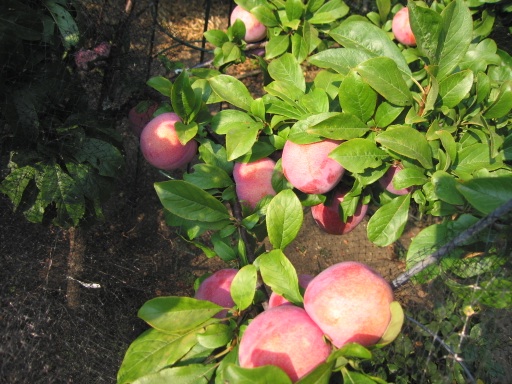
This week, I have been harvesting Elephant Heart plums from our multi-grafted plum tree, shown in the photo below. The skin of these plums can be quite sour, at least until the fruit is almost mushy, but the pulp has a nice flavor.
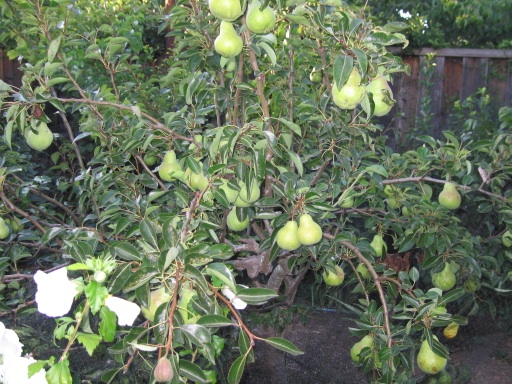
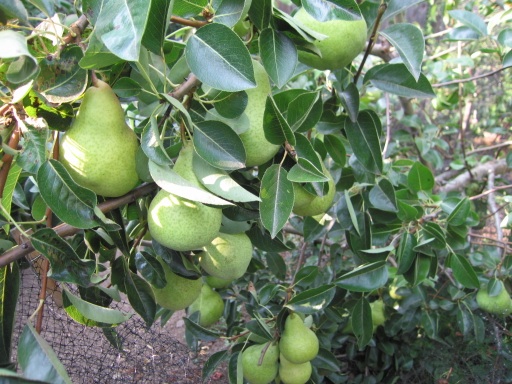
Our small Bartlett pear tree is loaded with at least 100 pears this year (photos of it below). I have picked over 30 pears from it already, but I’ve not eaten any of them yet. Pears are harvested while still green and unripe. They are ready to harvest if the fruit separates from the branch easily when the fruit is lifted by hand into a horizontal position. The pears from this tree have been exquisite in past years. Although, our tree typically only produces pears every other year.
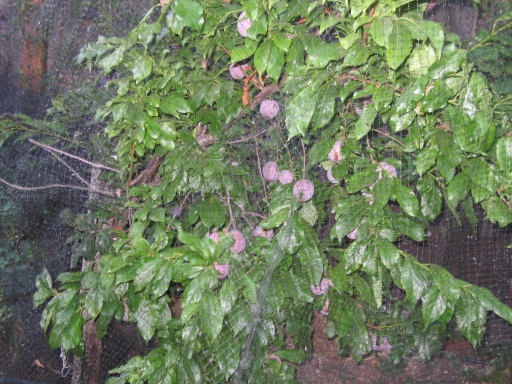
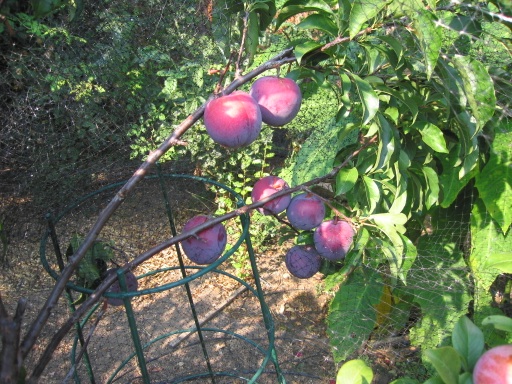
I am also harvesting Flavor King and Dapple Dandy pluots from our multi-grafted pluot tree. The first photo below is Flavor King (purple fruit), and the second photo is Dapple Dandy (pink fruit). I’m supporting the thin branches of this small tree with tomato cages, because there is too much fruit even after I thinned them. Also, the fruit is large (larger than last year’s harvest). I also have to protect them and my other fruit with netting.
Our pluot tree is one of my favorite fruit trees. Its fruits are delicious. Flavor King is perhaps one of the tastiest fruits I have eaten, even though plums in general are not my favorite fruit. Each of the 4 pluot varieties on our tree is unique in terms of its color, flavor, ripening time, and keeping quality. The other two varieties are Flavor Queen and Flavor Supreme. Dapple Dandy is a good variety, because it produces a lot of fruit, and the fruit holds well on the tree for several weeks.
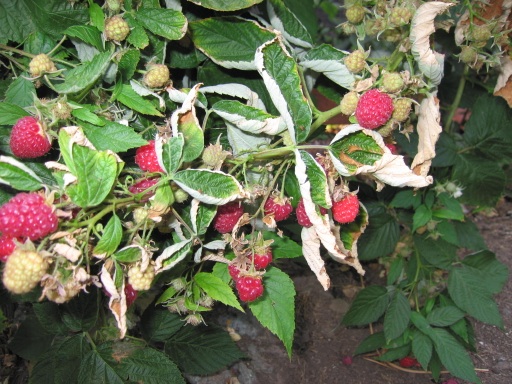
We also have a Caroline red raspberry plant that is growing in a large pot. Its canes are full of luscious looking raspberries right now, as shown in the next photo below. Unfortunately, our raspberries are not edible, because the insides of the berries are full of insect larvae that resemble very small white worms. Nearly all of the berries I have picked in the past week are full of the worms, and it’s not practical to remove them all. Although they may not be harmful if consumed, they are not appetizing.
July 29 2013 | Pears and Plums and Pluots and Raspberries | Comments Off on Mid-Summer Fruit
« Prev - Next »