Archive for the 'Fruit' Category
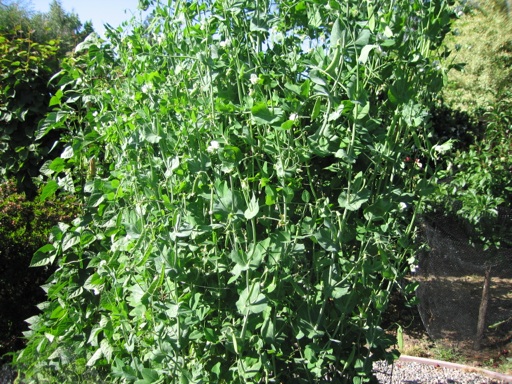
On March 1st of this year, I planted sugar snap pea seeds in one of our raised beds next to a wire trellis. All of the seeds sprouted within a week or two and grew rapidly after that. The pea vines are now over 6 feet tall (taller than the trellis) and are still growing. There are so many vines (I planted too many seeds) that wind blew them forward off the trellis a few weeks ago. I tied them back onto the trellis with string. I planted three rows of seeds at about a 3 inch spacing. Next time, I will plant only two rows of seeds spaced farther apart.
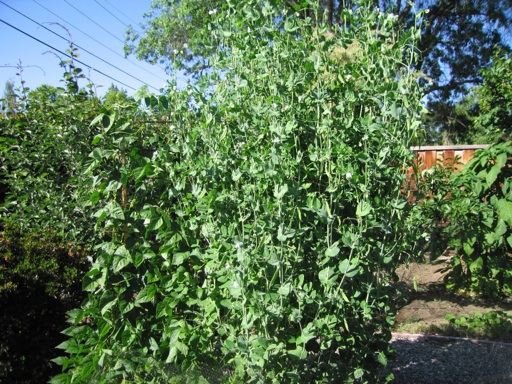
I am growing peas on the same trellis as blue lake green beans, which I have been growing for years. When I have planted green beans along the entire 6 foot long trellis in the past, the plants produced way too many beans to eat. So this year I planted half as many beans and planted peas next to the beans. The peas are out growing the beans and starting to crowd them.
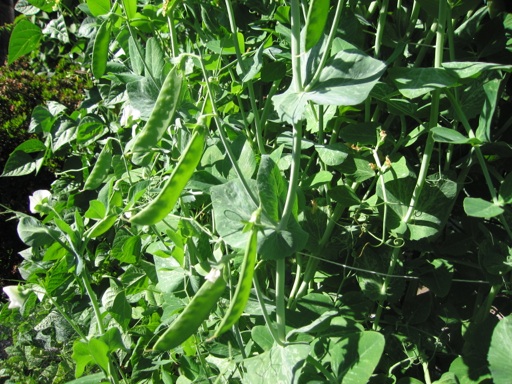
Our peas are now full of pods. I just began picking them last week. This is the first time I have grown peas, and I am wondering why I didn’t before. They are easy to grow, produce lots of sweet edible pea pods early in the growing season, and are good sources of vitamins A and K and especially vitamin C.
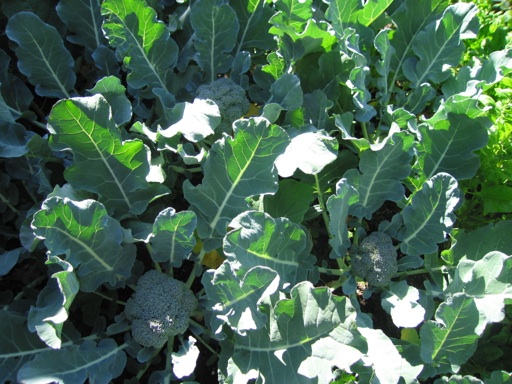
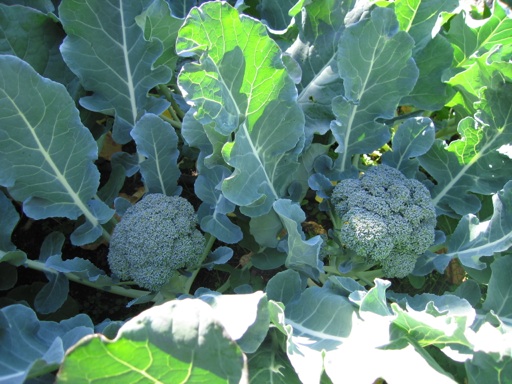
Our broccoli plants are large this year. I grew them by seed rather than buying nursery transplants, as I mentioned in a previous post. I have watered them regularly and applied water soluble fertilizer to them about once a week, which seems to have made a difference. Although right now, the plants are growing together and crowding each other out, which is probably limiting the size of the plants and the crowns. Next time, I may space them farther apart. 12 inches apart is not quite enough for maximum growth. Planting of broccoli seeds at just the right time is critical to getting large crowns. I think I got the timing right. Although, we’ve had two heat waves this month into the low 90s F, which is not ideal for broccoli growth. Our broccoli plants are forming crowns now. I just harvested the first crown today. These crowns in the lower photo look nearly ready to cut.
I also covered our broccoli plants with two layers of bird netting which helped to keep the snails away (they get stuck in it) and these white moths that want to lay larvae (worms) on the broccoli. The moths also can’t get through the netting.
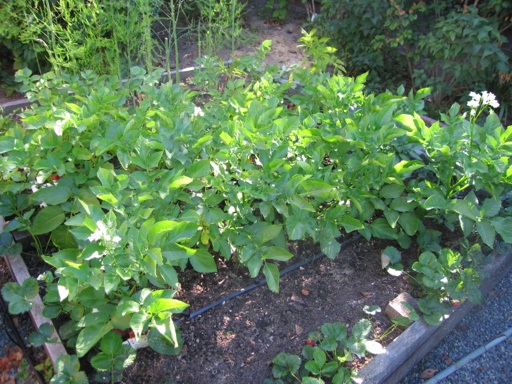
I have had mixed results with potatoes this year. I planted russet and yukon gold potatoes in Feb. and March. I have been planting potatoes in the same raised bed for years. Those potato plants (above photo) have not grown nearly as much as the potato plants that are growing in a different raised bed (below photo with corn in the back) where I had never planted potatoes until this year. It seems to be an example of the importance of rotating crops from year to year.
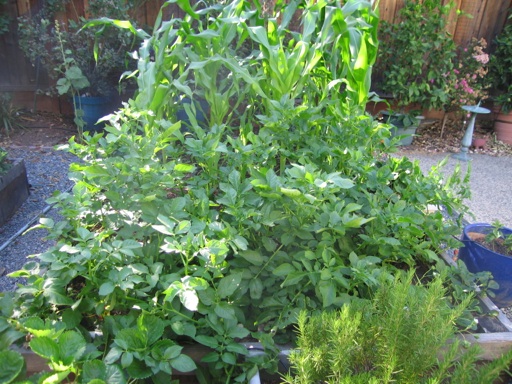
I sowed the corn seeds in mid-March, which is the earliest I have ever planted it. I sowed Peaches and Cream corn seeds, which is my favorite variety for taste. The seeds sprouted and grew about as quickly as in past years when I had always sowed the seeds in April. I am expecting to harvest corn by July 1, and then rip out these plants for a second planting of corn seeds to be harvested in late October. Home grown corn is so good, one harvest a year just isn’t enough!
May 21 2014 | Broccoli and Corn and Peas and Potatoes | Comments Off on Cool Season Crops
Last month, I dug up the Virginia peanut plants I had been growing in our vegetable garden since last April. I grew 11 peanut plants by seed. Each plant had about 10 peanut shells growing on them underground. After removing the peanuts from the plants, I left the peanuts outdoors in a sunny spot on a table for about 10 days to dry. I also covered them with bird netting to discourage pests from trying to eat them. After 10 days of drying outside, I could hear the nuts rattling around in the shells.
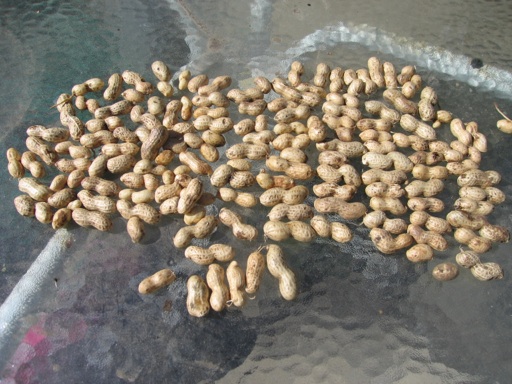
After drying the peanuts outside, I let them sit in bowl indoors at room temperature for about a month. Today, I roasted half of them in their shells in a 350 degree F oven for 25 minutes on a cookie sheet. Then, I shelled them with my hands and ate them. They’re a great home grown snack. My peanut are similar in quality and taste to peanuts sold commercially.
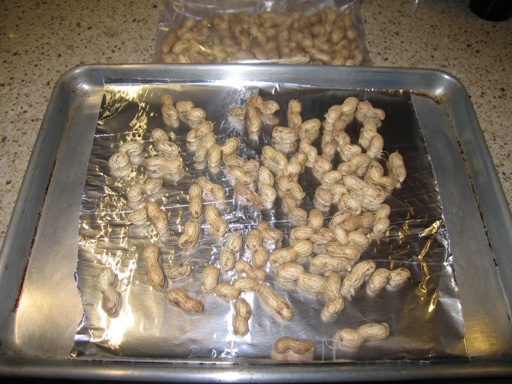
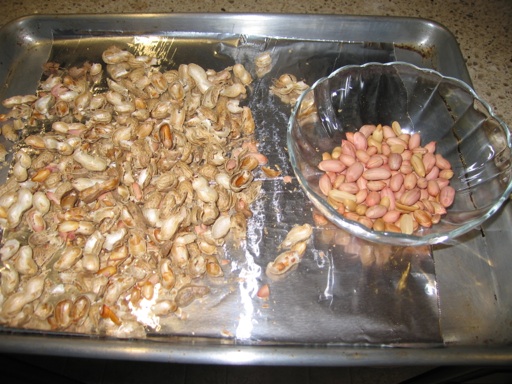
Overall, I am very happy with the results of my first crop of peanuts. One of my favorite things about them is that they seem to be nearly pest free. No critters even attempted to dig up my peanuts while they were growing. Although I’d imagine that gophers could potentially be a problem for peanut growers. Also, they required very little maintenance, other than regular watering. I didn’t fertilize our peanuts; although they probably would’ve grow larger and gotten more peanuts if I had. Also, the plants I grew were very compact in size and didn’t crowd out any of the plants nearby. So they were perfect for growing in a small raised bed. The only negative of growing peanuts for me is that it was a lot of work digging them up and searching for them in the dirt during harvest.
November 25 2013 | Peanuts | Comments Off on Nuts About Peanuts
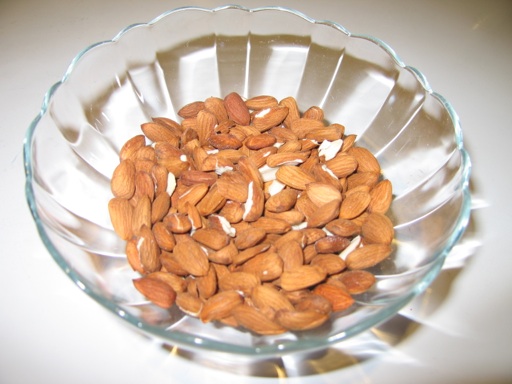
After letting the almonds that I harvested a few weeks ago dry in the sun for a week, I spent about an hour removing the shells from each of them. I hit each almond with a meat pounder to break the shells and then removed the almond nuts inside. The almond nuts were about half the size of almonds that are typically sold commercially. I then dry roasted our almonds in an oven on a cookie sheet (without any oil or salt) for about 30 minutes at 325 degrees F.
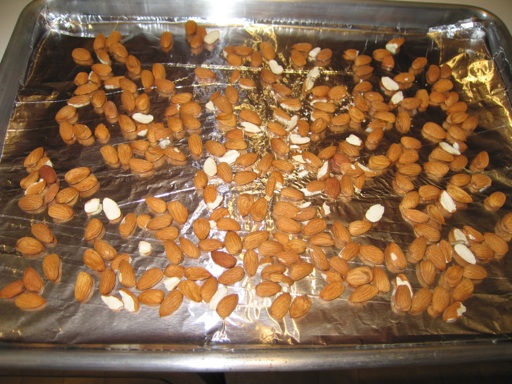
I am very impressed with the flavor of our home grown almonds. Our home grown almonds, although small, are much tastier than other almonds I have eaten in recent memory. Our home grown almonds have a great nutty flavor that lingers in the mouth. It’s a flavor that I don’t think I’ve ever tasted in almonds before. They are very flavorful even without salt or some other seasoning. Based on this first crop, I think that almonds are well worth growing at home, just to get to taste their full flavor. Although, it is a lot of work netting the tree, harvesting the almonds, hulling each almond, and then removing the shell from each almond.
I was concerned when I planted this tree that our summers would not be hot enough to get the almonds to ripen properly. But apparently, at least this variety (Garden Prince) produces great tasting almonds in a climate having warm summers, but not hot summers. Although, I doubt that any almonds would ripen properly close to the California coast where they would be exposed to fog and cold all summer. However, the foggy nights that we get in our area probably contributed to mold and mildew that formed on many of the almond shells. Fortunately, all of the almonds nuts inside the shells were completely free of mold and mildew.
October 03 2013 | Almond | Comments Off on Almond Update
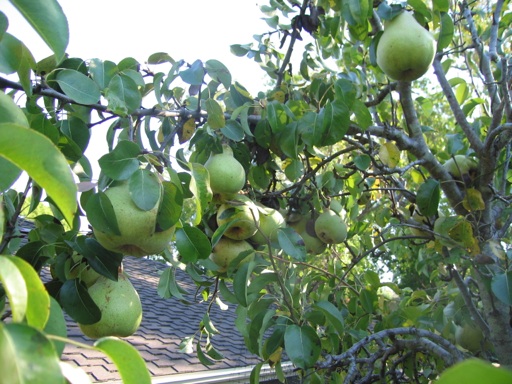
Last weekend, I harvested about 130 pears from our Comice pear tree. They are now in our extra refrigerator chilling for a month before I will take them out to fully ripen at room temperature. Our Comice pear tree is looking much healthier today than it did in past years. Once diffence is that I have been watering it 6 days a week. This tree seems to require lots of water, at least in our dry summer climate. In past years, I watered it 2-3 days a week, and the tree typically lost most of its leaves by September. This year, it has dropped many leaves already, but it still has most of its leaves now.
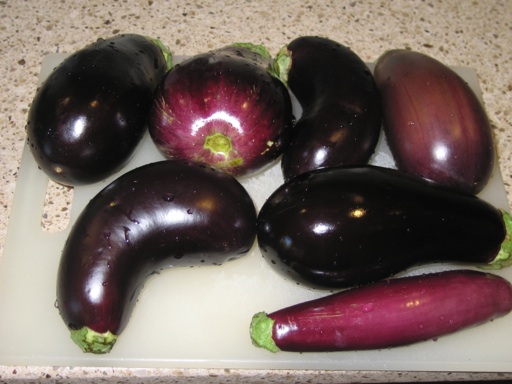
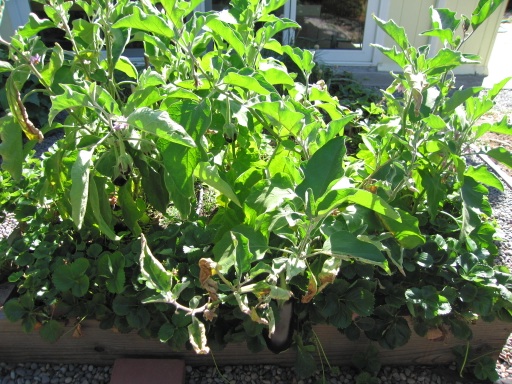
I am finally harvesting egggplants from our garden. I didn’t pick the first eggplants until late August, and it wasn’t until early September that I harvested several eggplants at once. Eggplants seem to thrive in warm weather. We have had relatively warm weather since early August, and our eggplants have been doing reasonably well since then.
September 30 2013 | Eggplant and Pears | Comments Off on Fall Eggplants and Pears
This weekend, I harvested all of the almonds on our Graden Prince almond tree. I picked them by hand, rather than shake the tree, because the tree is only 5 feet tall, and it only had about 200 almonds on it. Here’s what the tree looked like before the harvest:
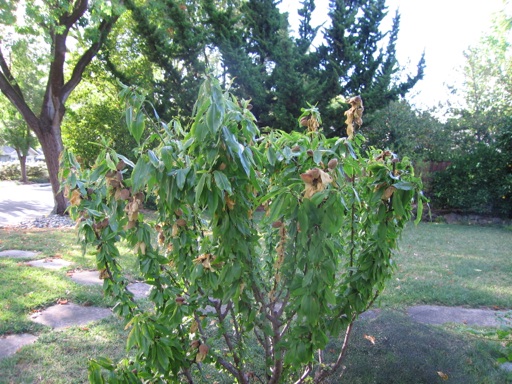
Each almond grows inside a hard shell and a soft hull. After picking each almond, I removed the soft hull, which is the first layer. I may have waited too late to harvest them, because many of the almond shells have white mildew on them. However, I have cracked a few of the shells open already, and the almonds inside appear to be free of mold and mildew.
After the harvest, I placed the almonds in their hard shells onto a cookie sheet to dry in the sun for a few days. I am covering the cookie sheet with netting in the daytime and bringing it inside at night to prevent them from being eaten by birds and squirrels. After the drying process, I will remove the almonds from their shells and then roast them in the oven.
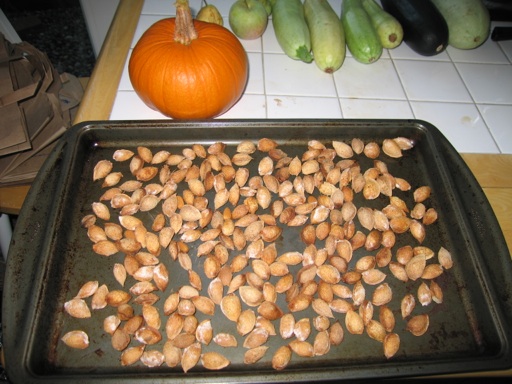
That’s a sugar pie pumpkin in the background of the above picture that I grew in our yard this summer and just harvested this weekend. I roasted it and made pumpkin soup with it, which turned out very well. We also roast and eat the pumpkin seeds.
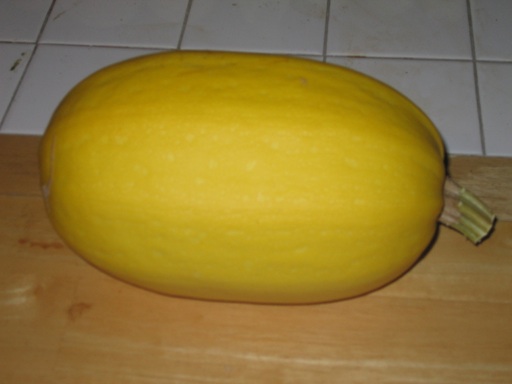
Below is a photo of a spaghetti squash that was also grown in our yard this year and just harvested. Winter squash has turned out to be very easy to grow in our yard. I just planted the seeds directly into the ground in the spring (some I planted in pots and then transplanted) and kept the plants watered through summer (watering nearly everyday with an automatic microspray system). I didn’t fertilize them or spray them. Six months later, almost every vine has at least one large squash.
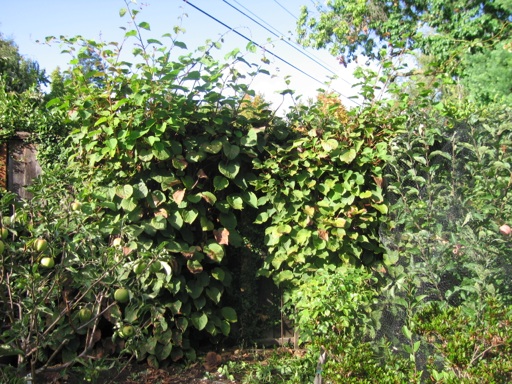
I’ve received some comments asking how my kiwifruit plants are doing. Below is a picture of them. The male plant is on the left and the female plant is on the right. They are both growing vigorously along our back fence, producing lots of long vines and leaves. I have to prune them 3-4 times a year to keep them to a reasonable size. However, neither plant has produced a single bloom, and the female plant has not produced a single fruit yet. I’m not sure why. Perhaps they are still not mature enough. They are both 4 years old.
September 22 2013 | Almond and Kiwifruit and Squash | Comments Off on Almond and Squash Harvest
« Prev - Next »