Archive for the 'Flowers' Category
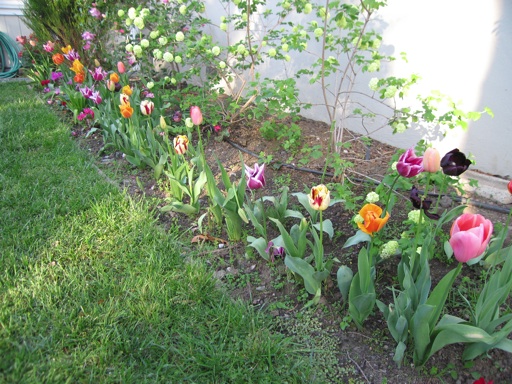
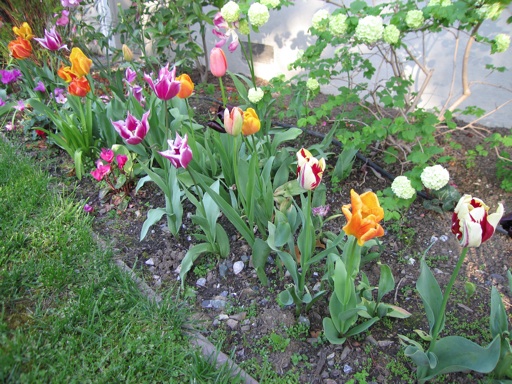
Tulips are one of the most attractive springtime flowers for the few weeks that they’re in bloom. Tulips come in many different colors and different mixes of colors on a single flower. I think they make a particularly eye-catching display when different colors of tulips are grown together. Each bulb only generates one flower per year, though.
I grow tulips as short lived perennials. I’ve been planting tulip bulbs in the same garden bed (shown in the pictures above) every fall for about 4 years. Each bulb blooms for 1 to 3 spring seasons before it fades away and eventually dies. The Bay Area is probably not cold enough to be an ideal climate for tulips, so I replenish our tulip bed every fall with a new planting of bulbs. It seems much easier than digging up old bulbs and refrigerating them as some people suggest. Last fall, I planted about 50 bulbs that included a mix of different colors.
I don’t fertilize our tulips, and I rarely water them. Usually, rains in winter and early spring are enough for them. This past winter was especially dry, so I did water the bed a few times.
April 15 2012 | Tulips | Comments Off on Multi-Colored Tulips
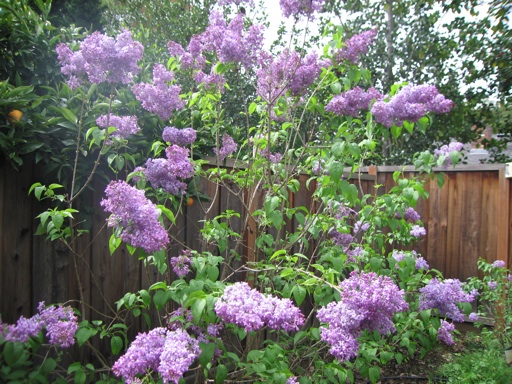
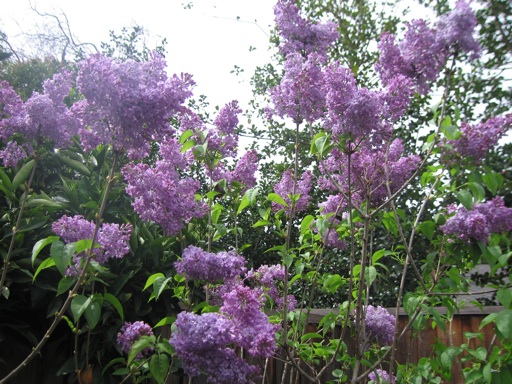
The lilacs in our yard have been in bloom for the past two weeks, but they look to be at their peak right about now. These are photos of one of our Lavender Lady lilac bushes, which is more full of flowers than it ever has been. The fragrance of lilacs is really like no other flower. The fragrance is so strong that I can smell it at a distance of about 10 feet away. We are also growing California Rose and Blue Skies (descanso hybrids for mild winter climates) and Sensation lilacs, but our Lavender Ladys get the most flowers by far each year.
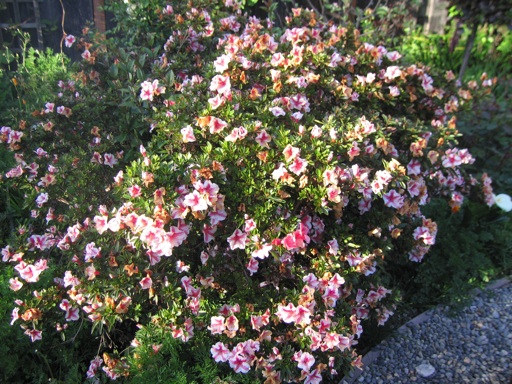
This is a photo of our one of our azalea bushes, which has been growing in our backyard since before we moved in. It is a well established bush at this point that doesn’t seem to need much care. Azaleas of course prefer partial shade, but this one seems to be doing well in full sun.
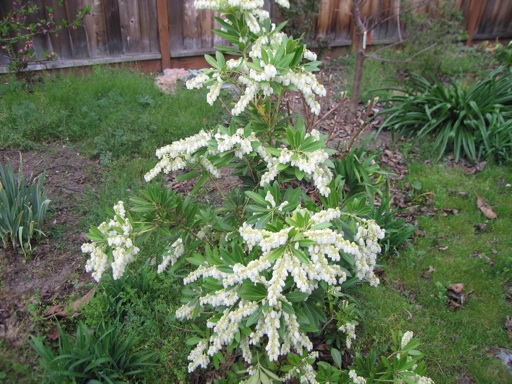
I can’t remember the name of this plant. It’s a small perennial bush. My mom gave it to me about 2 years ago. It has been flowering in our yard for the past 6 weeks, but its flowers are starting to fade now. This photo was taken about 3 weeks ago. Its flowers look like tight clusters of ‘lily of the valley,’ but it’s leaves are very distinctive and evergreen.
April 01 2012 | Lilacs and Rhododendron | Comments Off on Early Spring Flowers
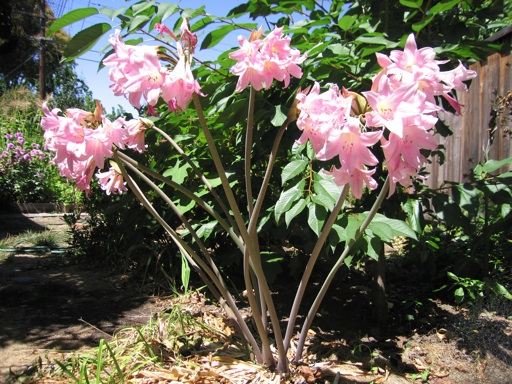
These are 3 pictures of flowers blooming in our yard this summer. The first picture shows an Amaryllis belladonna plant. These beautiful fragrant light pink flowers have appeared for the second year in a row from a bulb that I planted in the ground several years ago. The flower stems appear from the bare earth about a month after the leaves turn brown and die in June. Ours has about 10 flower stems this year, about twice as many as last year.
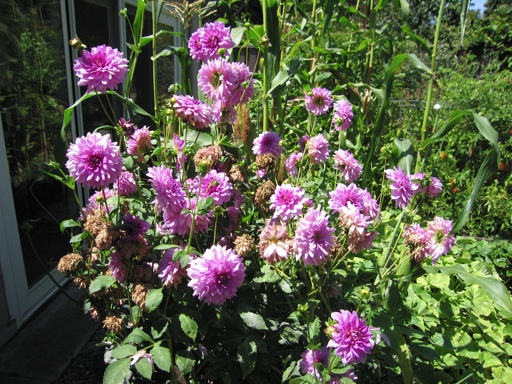
The second picture shows a cluster of purple dahlias that I planted in one of our raised bed gardens last year. These dahlias have grown vigorously and bloomed profusely in our raised beds, which get watered regularly and have some protection from snails and slugs. When I tried to grow dahlias in the ground a few years ago, snails devoured them.
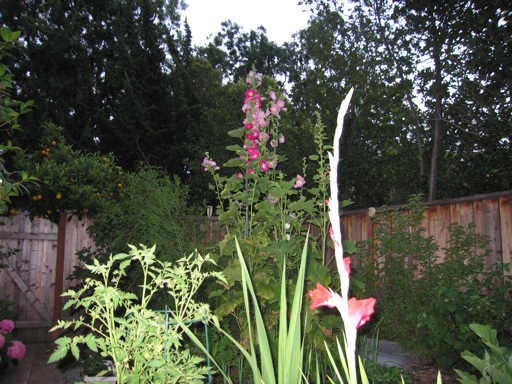
The third pictures shows a group of hollyhocks growing in another one of our raised bed gardens. I planted the hollyhocks by seed last summer. They have grown very quickly over the past year with regular watering, but no fertilizer. Some of our hollyhocks are now over 8 feet tall. Our hollyhocks started blooming in early July, and they were full of dozens of flowers of various shades of pink and white for over a month. Now they are starting to fade. This picture was taken about a month ago.
August 20 2011 | Amaryllis and Dahlias and Hollyhock | Comments Off on Summer Flowers
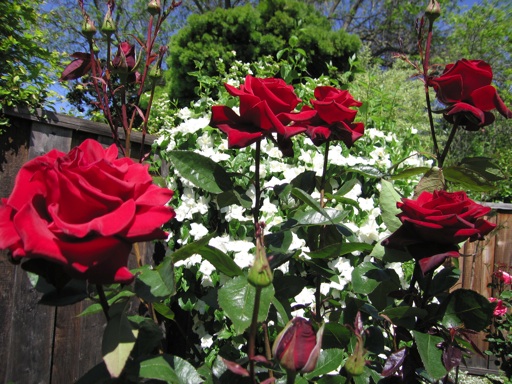
These are more pictures of the roses in our yard that are blooming this weekend. The first photo shows our red Black Magic tree rose. It’s not a fragrant rose, but it has very long lasting perfectly-shaped flowers.
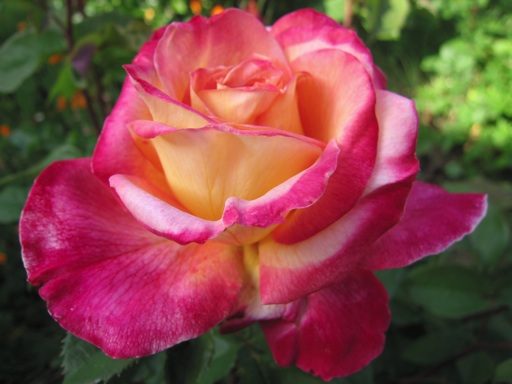
This is another photo of one of our pink Color Magic roses.
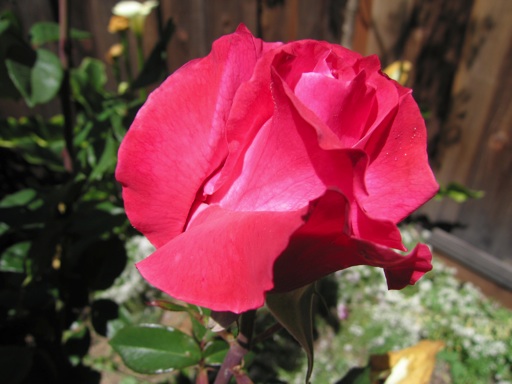
This is another photo of our Sheila’s Perfume rose.
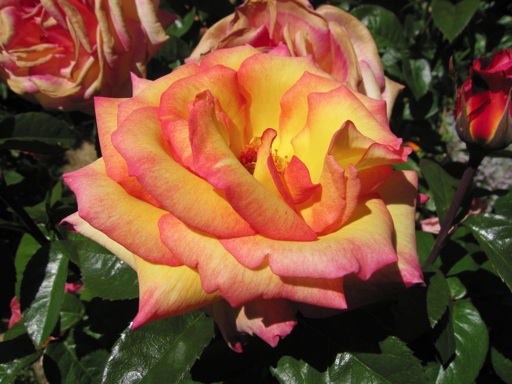
This is a photo of our Double Delight rose.
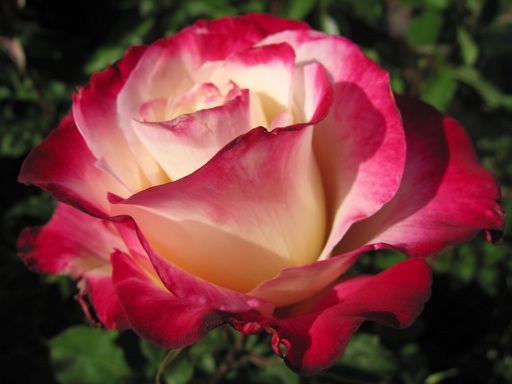
This is a photo of our Surprise rose.
April 30 2011 | Roses | Comments Off on More Rose Pictures
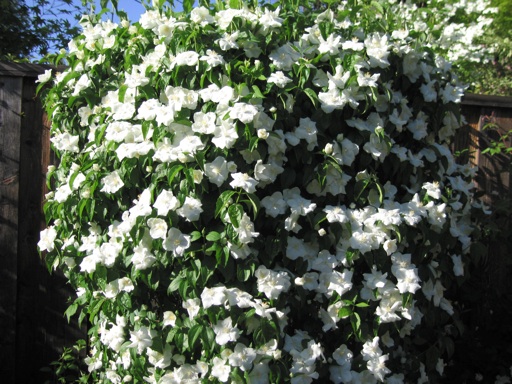
Of course, spring isn’t just about roses. We also have some very attractive white flowers blooming in our yard this month. The philadelphus plant shown below that we have growing near our fence has been looking better every year. Ever since I removed 2 old trees that were shading it, this plant has really taken off and grown rapidly. Every April for the past few years it gets covered in beautiful white flowers.
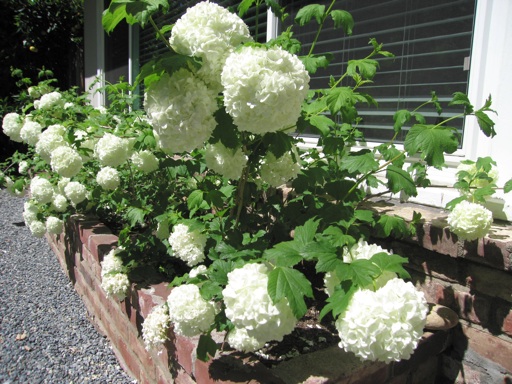
Below are a few plants called Viburnum Opulus Roseum (also known as the Snowball flower) that we planted as nursery transplants last year. They are full of their characteristic snowball-like flowers now. Ironically, their buds form and open as springs arrives, the temperatures warm, and snow (if you ever get it in your area) is just a distant memory. Both the snowball and the philadelphus are only spring bloomers. Both have a tendency to grow quite large unless pruned regularly.
April 29 2011 | Philadelphus and Viburnum | Comments Off on More spring flowers
« Prev - Next »